
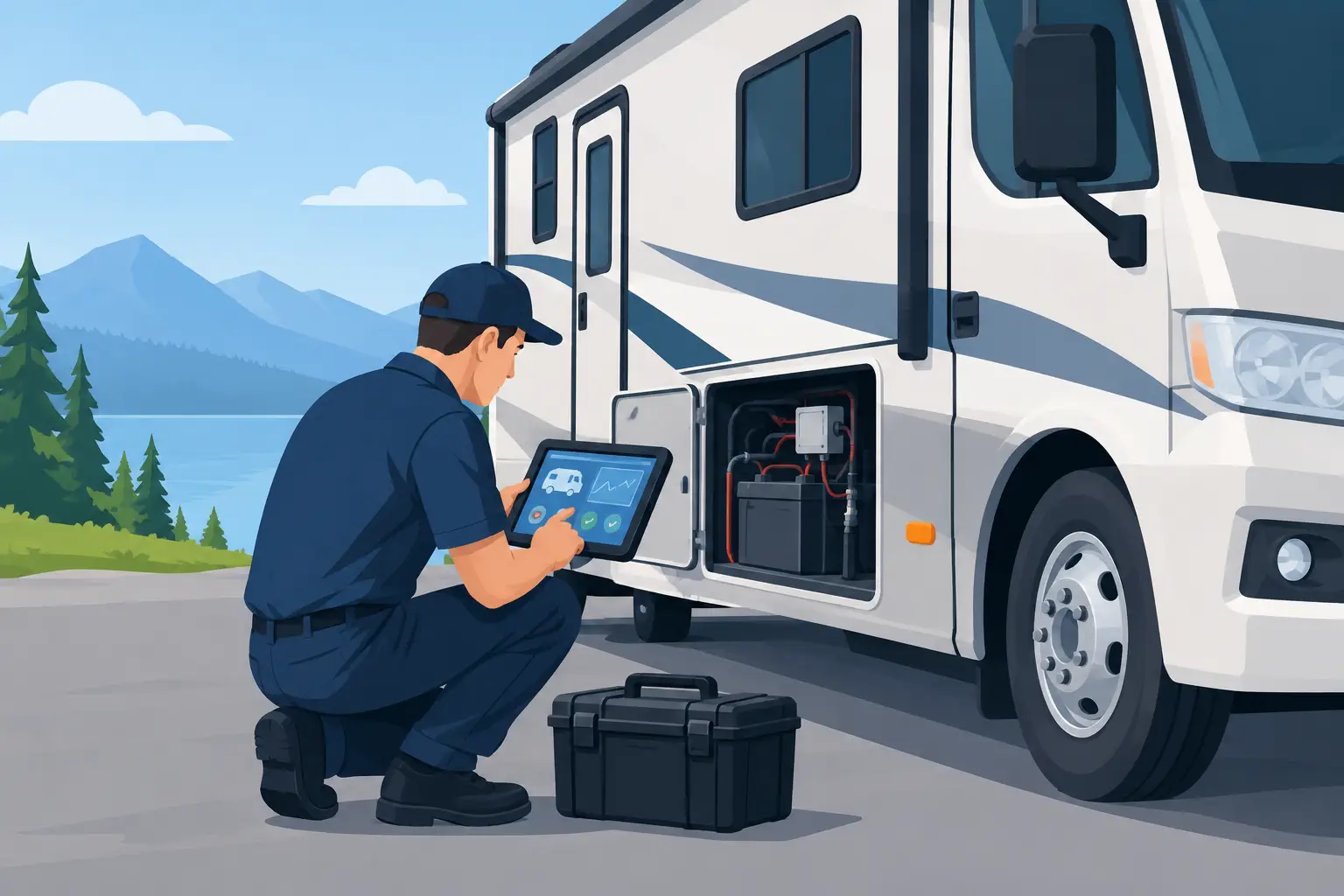
RV Diagnostic Service Before Your Next Trip
A hot afternoon at a Tennessee campground is a bad time to learn that the air conditioner is not getting power. The same goes for finding water under the kitchen cabinet the night before a trip. An RV diagnostic service gives you a clear answer before a small concern turns into a canceled weekend, a damaged interior, or an unsafe situation on the road.
RV problems rarely announce themselves in a neat, obvious way. A battery may look charged but fail under load. A water heater may light briefly and then shut down. An outlet may not work because of a tripped GFCI, a loose connection, a converter issue, or a problem at the shore power pedestal. Proper diagnosis matters because replacing parts without finding the cause can cost more and still leave you with the same problem.
What an RV Diagnostic Service Can Check
A diagnostic visit is designed to trace a symptom back to its source. Depending on what your RV is doing, a technician may inspect the 12V battery system, 110V shore power system, converter, breakers, fuses, outlets, and appliance connections. For many owners, electrical problems are the most frustrating because several systems can affect one another.
Water and plumbing concerns need the same careful approach. A slow leak can come from a fitting, water pump, water heater, toilet seal, exterior connection, or cracked line. Finding the origin matters more than simply drying the floor. Moisture trapped behind cabinets, under flooring, or around walls can lead to rot and more expensive repairs if it is left alone.
Heating, cooling, and appliance diagnostics may include checking power supply, controls, airflow, propane delivery, ignition components, and safety switches. An RV furnace that will not stay running is not always a furnace replacement. An air conditioner that blows warm air may have a power, thermostat, capacitor, airflow, or mechanical issue. The right repair depends on what testing reveals.
Roof and exterior inspections are also valuable when you notice staining, soft spots, cracked sealant, or a musty odor. Water has a way of traveling before it appears inside the RV, so the visible stain is not always directly below the leak.
Signs You Should Schedule RV Diagnostics
You do not need to wait for a complete breakdown to ask for help. Pay attention when a system begins behaving differently than it normally does. A few warning signs are especially worth addressing before your next outing:
- Batteries that drain quickly, lights that flicker, breakers that trip, or outlets that stop working.
- Water around the toilet, under sinks, near the water heater, or beneath the RV after using the plumbing system.
- An air conditioner that runs but does not cool, a furnace that cycles off, or a refrigerator that will not maintain temperature.
- A sulfur smell, a propane smell, unusual clicking, burning odors, or repeated fault codes.
- Soft roof areas, peeling sealant, water stains, or evidence of moisture around windows, vents, and slide-outs.
Some issues call for immediate attention. If you smell propane, see smoke, notice sparking, or suspect an active electrical or water leak, turn off the affected system when it is safe to do so. Do not keep resetting breakers or trying to force an appliance to run. A quick response can protect both your RV and the people in it.
What Happens During a Mobile Diagnostic Visit
Mobile service starts where your RV is parked, whether that is at home, in storage, at a campground, or in a roadside location within the service area. That is a major advantage when your camper, travel trailer, or fifth wheel is not safe or convenient to tow to a shop.
The technician will begin by listening to what happened, when it started, and what conditions seem to trigger it. Those details help narrow the search. For example, an outlet that fails only when connected to shore power points to a different set of possibilities than an outlet that fails while running from the battery system.
Next comes hands-on testing. This may involve checking voltage, battery condition, fuses, breakers, connections, water pressure, appliance operation, or visible signs of damage. In many cases, the problem can be repaired during the same visit if the needed part is available and the repair is appropriate for the location.
Sometimes diagnosis reveals a larger issue, such as hidden water damage, a failed major appliance component, or a repair that requires a specific replacement part. That is still useful information. You will know what is wrong, what needs to happen next, and whether it makes sense to repair, replace, or plan the work around an upcoming trip.
Diagnosis Is Not Guesswork, and It Is Not Always a Quick Fix
It is understandable to hope that a dead outlet means a simple fuse or that a leaking water heater needs only a new fitting. Occasionally, it is that straightforward. Other times, symptoms overlap. A weak house battery can mimic appliance trouble. A tripped GFCI can affect outlets farther away. A roof leak may show up inside several feet from the actual failed seal.
That is why a professional RV diagnostic service saves time. It replaces repeated trial-and-error repairs with a methodical inspection. It can also help you avoid buying parts that do not solve the problem.
The trade-off is that diagnosis takes time, especially when an issue is intermittent. If a system works normally when tested, a technician may need to look for loose connections, heat-related failures, moisture intrusion, or a pattern tied to how the RV is being used. Clear notes, photos, fault codes, and a short video of the symptom can make that process faster.
How to Prepare for Your Appointment
You do not need to troubleshoot the RV yourself before service, but a little preparation is helpful. If possible, have the RV accessible and let the technician know the make, model, and year. Keep the affected area clear, and make sure there is access to shore power or water if the problem occurs only while those systems are in use.
Write down what you have noticed: when the issue began, whether it happens on battery or shore power, which appliances are running, and whether any warning lights or error codes appeared. If you recently changed a battery, replaced a fuse, had work done, or experienced a power surge, mention that too.
For owners around Maryville, Knoxville, Townsend, Tellico Village, Lenoir City, and nearby communities, Time In Season Mobile RV Repair brings diagnostic help to the RV rather than asking you to move a disabled unit. That can make a difficult repair situation far more manageable.
Prevent Problems Before Travel Day
The best time to find a problem is before the campsite reservation, the packed cooler, and the long drive. Test your air conditioner and furnace before the season changes. Run water through every fixture, check around the water heater, inspect roof sealant, and verify that your batteries charge correctly. Before a longer trip, confirm that major appliances operate on the power source you expect to use.
You do not have to know how to repair every RV system to take good care of your investment. Notice changes early, avoid forcing a failing system to work, and get a qualified set of eyes on problems that affect safety, comfort, or water intrusion. A little diagnostic attention now can help your next trip start with the key in the ignition instead of a repair list.