
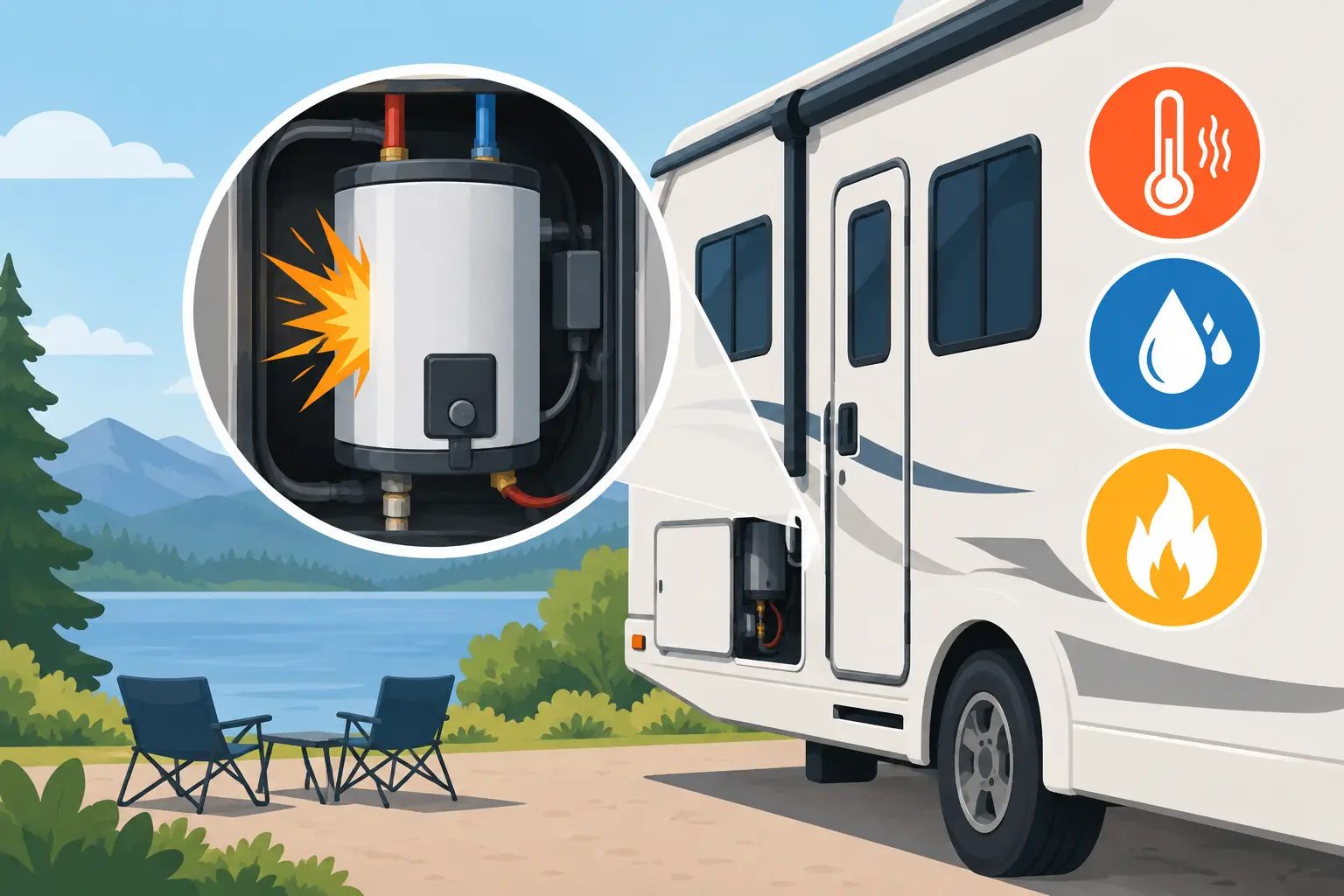
Can an RV Water Heater Explode? Know the Signs
A hot shower at the campground should not come with a safety concern. Still, many owners ask, “Can an RV water heater explode?” The honest answer is yes, but a true tank explosion is uncommon when the appliance is correctly installed, maintained, and shut down when something seems wrong.
Most serious water-heater incidents begin with a problem that gives off warning signs first: excessive pressure, a failed safety valve, a gas leak, improper combustion, or an appliance that has been neglected for too long. Knowing what to watch for can protect your family, your RV, and your travel plans.
Can an RV Water Heater Explode?
An RV water heater is a pressurized appliance that uses propane, electricity, or both to heat water in a small tank. If pressure builds beyond safe limits and the temperature-and-pressure relief valve cannot do its job, the tank can fail violently. That is the scenario most people mean when they say “explode.”
There is also a separate propane hazard. A damaged gas line, loose fitting, failed control valve, or poor combustion can allow propane to collect. Because propane is highly flammable, an ignition source can cause a fire or blast. This is why a water heater that smells like gas, burns with an unusual flame, or makes alarming noises deserves immediate attention.
Modern RV water heaters have safety controls designed to reduce these risks. The relief valve releases water if tank pressure or temperature gets too high, while the thermostat and high-limit switch control heating. Those protections only work when they are in good condition. Corrosion, mineral buildup, improper repairs, and years of skipped maintenance can all create trouble.
Warning Signs You Should Not Ignore
A water heater rarely goes from working normally to dangerous without giving you a clue. Stop using it and arrange a diagnosis if you notice any of these signs:
- Water dripping steadily from the temperature-and-pressure relief valve or running from the exterior water-heater compartment.
- A rotten-egg propane smell near the RV, water-heater access door, or inside the coach.
- Popping, rumbling, banging, or a loud hissing sound while the heater is operating.
- Soot around the outside burner area, a yellow or lazy flame, or repeated burner blowouts.
- Scalding-hot water, fluctuating water temperature, or the unit cycling on and off unexpectedly.
- Bulging metal, severe rust, melted wiring, blackened surfaces, or signs that water has been leaking for some time.
A small amount of water from the relief valve can happen during heating because water expands as it gets hot. But repeated dripping is not something to dismiss with a towel under the compartment. It may point to excessive system pressure, a failing valve, or a thermostat issue.
What To Do If Your RV Water Heater Seems Unsafe
Do not keep testing the appliance to see whether the problem repeats. Turn the water heater off at its control switch. If it is an electric or combination model, switch off the dedicated breaker as well. Do not run an electric heating element unless you are certain the tank is full, because a dry-fired element can burn out quickly and may damage the unit.
If you smell propane, do not light a match, start the generator, operate electrical switches, or use the water heater. Leave the immediate area, keep others away from the RV, and shut off the propane at the cylinder only if you can do so safely. Call emergency services if you believe there is an active leak, fire, or immediate danger.
If the unit is hot or releasing water, stay clear of the relief-valve discharge area. Hot water and steam can cause serious burns. Do not plug, cap, tie down, or remove the temperature-and-pressure relief valve to stop a leak. That valve is a critical safety device, not an optional fitting.
Once the appliance is off and the situation is stable, a qualified RV technician can inspect the tank, burner assembly, gas connections, safety controls, valve, plumbing pressure, and electrical components. A proper diagnosis matters because replacing one visible part may not address the condition that caused it to fail.
Common Causes of Dangerous Water-Heater Problems
A Failed Temperature-and-Pressure Relief Valve
The temperature-and-pressure relief valve, often called the T&P valve, is the last line of defense against excessive tank pressure. It should open when pressure or temperature exceeds its safe limit. If corrosion, mineral deposits, or a defective spring prevent it from opening, pressure can build in the tank.
A valve that leaks constantly is not necessarily defective by itself. The root cause may be high water pressure coming into the RV or thermal expansion within a closed plumbing system. Replacing the valve without checking the system can mean the new one starts leaking too.
Too Much Water Pressure
Campground and city-water pressure can vary widely. Some connections deliver more pressure than RV plumbing fixtures and appliances should handle. A quality RV water-pressure regulator helps protect the water heater, pipes, faucets, toilet valve, and seals.
This is especially relevant when you arrive at an unfamiliar campground or hook up at a friend’s home. If the regulator is damaged, set incorrectly, or missing altogether, high pressure can stress the water-heater tank and cause the relief valve to discharge.
Propane Burner or Venting Trouble
A propane water heater needs clean combustion and a clear path for exhaust. Spider webs, mud-dauber nests, rust flakes, insects, and debris can interfere with the burner tube or vent area. A yellow flame, soot, or frequent ignition failures can signal incomplete combustion.
Do not clean the burner with improvised tools or adjust gas components unless you know the appliance and procedure. A burner that looks simple from the outside is connected to systems that must be correctly aligned and sealed.
Corrosion and Tank Damage
Many tank-style RV water heaters use an anode rod to attract corrosive minerals before they attack the tank. When the anode is depleted, corrosion can accelerate inside the heater where it is difficult to see. A neglected tank can eventually leak or weaken.
The right maintenance schedule depends on how often you use your RV, your water source, and the heater model. For many owners, checking the anode rod and flushing the tank as part of seasonal maintenance is inexpensive insurance compared with replacing a water heater during a trip.
Electrical Problems and Dry Firing
Electric heating elements can fail when a tank is empty or partly drained. This often happens after winterizing, de-winterizing, or servicing the plumbing system when someone turns on the electric switch before filling and purging the heater.
A burned-out element is usually not an explosion risk by itself, but damaged wiring, a failed control board, or repeated breaker trips should be inspected. Electrical problems have a way of becoming larger problems when ignored in a moving, vibration-prone RV.
Preventing Water-Heater Trouble Before Your Next Trip
A few routine habits make a real difference. Use a pressure regulator whenever you connect to city water. Before lighting the propane burner, inspect the exterior access door for nests, debris, soot, water stains, and loose wires. Make sure the water-heater tank is full before using electric mode, and never operate the unit with the bypass valve still set for winterization.
At least seasonally, inspect the anode rod if your model uses one and flush sediment from the tank according to the manufacturer’s recommendations. Test the relief valve only as directed for your specific heater, since forcing an old valve open can sometimes cause it to drip afterward. If you are unsure, let a technician inspect it during routine service.
Winterizing is another key moment. Water left in a heater or connected plumbing can freeze during an East Tennessee cold snap, expand, and damage fittings or the tank. Draining the system properly before storage helps avoid springtime leaks and surprise repair bills.
When It Is Time to Call for Mobile RV Repair
Call for professional help if you have a propane smell, soot, recurring relief-valve discharge, rusty water, an unexplained leak, a burner that will not stay lit, or electrical breakers that trip when the water heater is used. Those are not problems to postpone until after the weekend.
For RV owners around Maryville, Knoxville, Townsend, Tellico Village, Lenoir City, and nearby communities, Time In Season Mobile RV Repair can come to your home, campground, storage location, or roadside location for water-heater diagnostics and repair. Getting the RV checked where it sits saves you from towing a trailer or fifth wheel to a shop while an appliance issue is still unresolved.
Your water heater does not need to be a mystery or a source of worry. Treat unusual smells, leaks, soot, and pressure symptoms as your RV asking for attention, and handle them before the next hot shower becomes the last thing on your mind.