
Camper Propane System Safety Guide for RV Owners
A propane problem can turn a relaxing weekend at the campground into a serious safety concern fast. Your camper propane system safety guide starts with a simple habit: know what normal looks, sounds, and smells like before you need to react. A properly maintained LP gas system quietly powers comforts such as your furnace, refrigerator, water heater, cooktop, and oven. When something seems off, do not guess or keep using the appliance.
Know the Warning Signs of a Propane Leak
Propane has an added odorant that smells similar to rotten eggs, sulfur, or a skunk-like odor. If you smell propane inside or near your camper, treat it seriously, even if the smell seems faint or comes and goes. A hissing sound near the cylinder, regulator, hose, or appliance connection can also point to a leak.
If you suspect a leak, do not turn lights, fans, appliances, or electrical switches on or off. Do not smoke, start a vehicle, use a lighter, or create any spark near the RV. Get everyone away from the camper, including pets, and move to a safe distance. If it is safe to do so without entering a gas-filled area, close the propane cylinder valve by turning it clockwise. Then call emergency services or your propane supplier as the situation requires.
Do not return to the RV or try to relight an appliance until the source of the leak has been found and repaired. A propane leak is not a place for a temporary patch or a wait-and-see approach.
Start With the Cylinder and Regulator
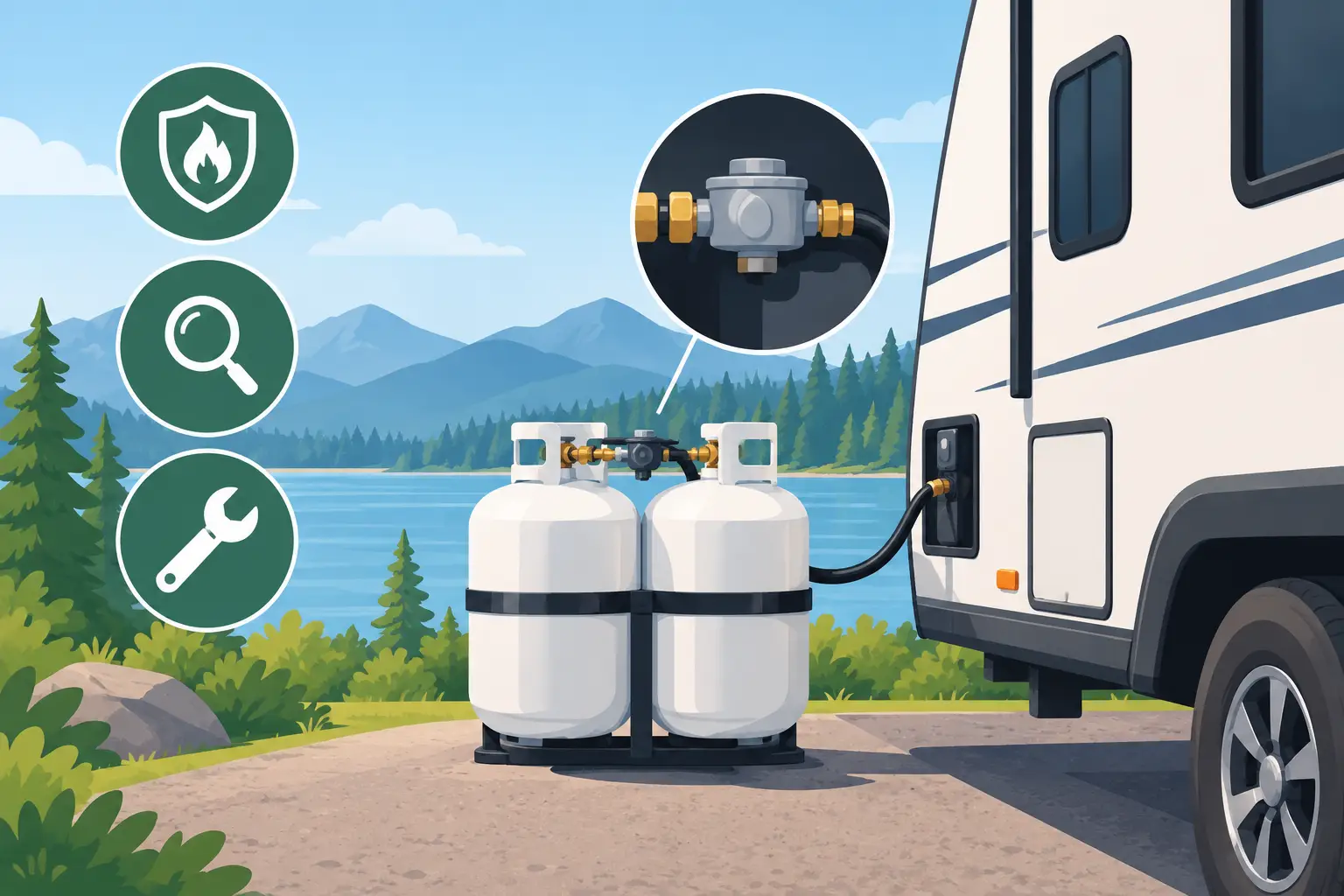
The propane cylinder, pigtail hose, regulator, and fittings are exposed to road vibration, weather, road debris, and normal aging. Before a trip and at the start of each camping season, give these parts a close visual check.
Look for rust, dents, corrosion, cracked rubber hoses, loose fittings, and signs that a hose has been rubbing against a sharp edge. Make sure the cylinder is secured upright in its designated compartment or mount. A cylinder that can shift while driving can damage the valve, hose, or regulator.
The regulator should be protected from direct road spray and installed with its vent facing downward. Water or insects can block that vent and affect gas pressure. Symptoms of a regulator problem can include weak burner flames, appliances that will not stay lit, soot around appliance vents, or an unusual propane smell. Those symptoms can also come from other causes, which is why proper diagnosis matters.
Never use a flame to look for a propane leak. Instead, with the propane system on and all appliances off, apply an approved leak-detection solution or a mixture of dish soap and water to accessible connections. Growing bubbles indicate escaping gas. Turn off the propane immediately if you see bubbles, and arrange for repair before using the system again.
Use Appliances the Way They Were Designed
Every propane appliance in your RV needs adequate ventilation and a clear path for combustion gases to exit. That matters most with furnaces, water heaters, refrigerators, ovens, and cooktops. Keep exterior appliance vents clear of mud, leaves, insect nests, storage items, and aftermarket covers not intended for use while the appliance is running.
Your furnace and water heater should vent outdoors, never into a compartment or enclosed area. If you see soot around an exterior vent, smell exhaust inside, or notice a yellow, lazy flame where there should be a steady blue flame, stop using that appliance. Yellow flames and soot can signal incomplete combustion, burner blockage, or an air-to-fuel problem.
A cooktop is for cooking, not for heating the camper. Running burners or the oven to warm the cabin can create excess moisture and raise the risk of carbon monoxide buildup. Even when camping in cool Smoky Mountain weather, use the RV furnace for heat and keep its vents maintained.
Follow the appliance manufacturer’s lighting instructions, especially after the propane has been shut off or a cylinder has been replaced. Air in the line can cause a burner to fail to light at first. If an appliance repeatedly will not light, do not keep cycling it or holding the gas control open. That is a good time to have the system checked.
Keep Your Propane and Carbon Monoxide Detectors Ready
Your RV’s LP gas detector and carbon monoxide detector are small devices with a big job. The LP detector is typically mounted low because propane is heavier than air. The carbon monoxide detector is usually positioned according to its manufacturer’s instructions. Both need working power and regular attention.
Test the alarms monthly using their test buttons, replace batteries where applicable, and check the manufacture date on the unit. Many RV detectors have a limited service life, often around five to seven years, though the label on your specific unit is the authority. A detector that chirps, shows an end-of-life warning, will not reset, or has been painted over should be replaced rather than ignored.
Do not assume a silent detector means everything is safe. Detectors are a backup layer of protection, not a substitute for inspecting your system, maintaining appliances, and responding to propane odors.
Practice Safe Filling, Storage, and Travel Habits
Have propane cylinders filled or exchanged by a qualified provider, and do not overfill them. Propane needs room to expand as temperatures rise. A full cylinder left in direct summer sun can build pressure, so keep cylinders in their approved exterior location rather than inside the RV, tow vehicle, garage, or basement.
Before traveling, turn off the cylinder valve unless your RV manufacturer specifically directs otherwise for an approved appliance. Verify that the cylinder is secured and that the compartment door is latched. Never travel with portable propane cylinders loose in the camper or passenger area.
At the campground, keep the cylinder compartment clear. Do not pack chairs, tools, cleaning supplies, or firewood around the regulator and hoses. If you use a portable propane fire pit or grill, keep it outside on stable ground and away from the RV, awning fabric, dry grass, and open windows. Portable appliances have their own hose, regulator, and clearance requirements, so they should not be treated like an extension of the camper’s built-in system.
Seasonal Care Prevents Mid-Trip Trouble
Propane systems often sit unused for months, especially for campers stored through the Tennessee winter. Before your first trip, inspect the cylinder compartment, test alarms, check hose condition, and run each appliance one at a time. Open the propane valve slowly. Opening it too quickly can trigger the excess-flow safety device in some hoses, restricting gas flow and making an appliance seem faulty.
During winterization or long-term storage, protect exterior vents from pests according to appliance guidance, but remove any temporary covers before operation. Mud daubers and insects are common troublemakers around burners and vents. A blocked furnace or water-heater vent can create poor performance and unsafe combustion conditions.
A yearly professional inspection is a sensible choice for frequently used RVs, older campers, or any unit that has had a regulator replacement, rodent damage, collision, water intrusion, or unexplained appliance issue. It is also worthwhile before a long trip when you do not want a furnace, refrigerator, or water heater problem to interrupt your plans.
When to Call for Mobile RV Propane Help
Some owner checks are straightforward, but propane repairs should not be a trial-and-error project. Call for service if you find a leak, smell propane without an obvious cause, see damaged hoses or fittings, have a regulator concern, or notice recurring ignition failures, soot, yellow flames, or detector alarms.
Time In Season Mobile RV Repair can come to your home, campground, storage site, or roadside location throughout the greater Knoxville area to help diagnose RV appliance and operating-system concerns. That convenience matters when a travel trailer or fifth wheel is not safe or practical to tow to a shop.
Your RV is supposed to be the comfortable part of the journey. A few careful checks, working detectors, and prompt attention to warning signs help keep propane working quietly in the background, right where it belongs.