
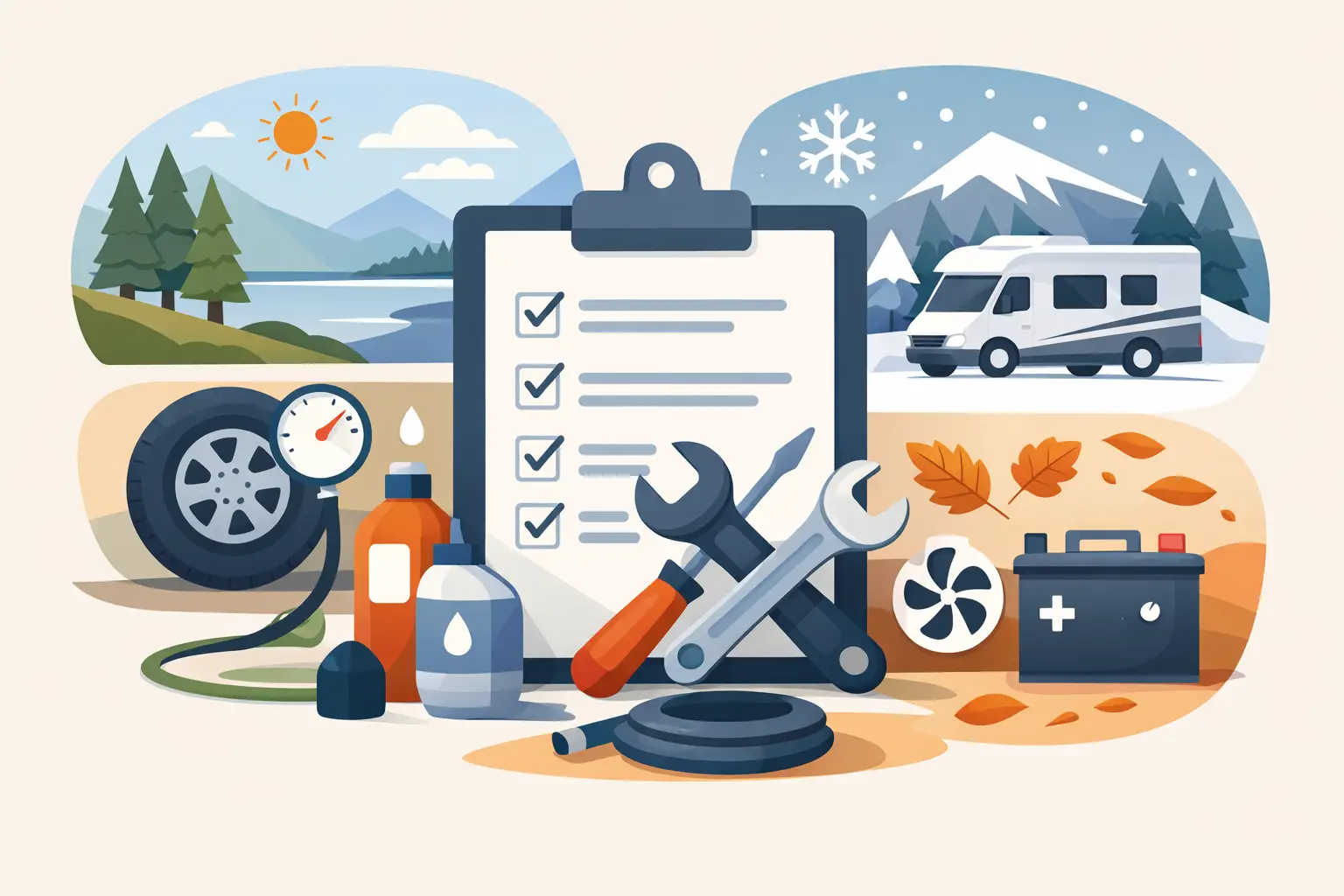
RV Maintenance Checklist for Every Trip and Season
A small water stain near a cabinet, a tire that looks slightly low, or an air conditioner that takes too long to cool can become a trip-ending problem faster than most RV owners expect. This rv maintenance checklist helps you spot trouble early, protect your investment, and leave the driveway with more confidence.
You do not need to become an RV technician to keep your camper, travel trailer, or fifth wheel in good shape. You do need a regular routine and a clear sense of when a repair calls for professional help. In East Tennessee, changing temperatures, heavy rain, humid summers, and winter cold all put added pressure on roofs, seals, plumbing, and appliances.
Start With a Pre-Trip RV Maintenance Checklist
A pre-trip inspection is your best opportunity to find problems at home instead of at a campground or along the roadside. Plan to do it a few days before departure rather than the morning you leave. That gives you time to address a leak, replace a worn part, or schedule service if something is not working correctly.
Walk around the RV slowly and look up, down, and underneath. Check these key areas:
- Inspect the roof, roof seams, vent covers, skylights, and sealant for cracks, gaps, lifting edges, or soft spots.
- Check all tires for low pressure, visible cracking, bulges, uneven tread wear, and damage from curbs or road debris. Include the spare.
- Test exterior lights, brake lights, turn signals, running lights, and the trailer breakaway switch.
- Look at the awning fabric, arms, hardware, and mounting points. Make sure it retracts smoothly and locks securely.
- Confirm that propane cylinders are secured, the regulator looks intact, and there is no propane odor.
- Inspect the hitch, coupler, safety chains, electrical connection, pin box, and stabilizers for secure operation.
Tire condition deserves extra attention. RV tires can age out before the tread looks worn, especially when the RV sits in storage. Proper pressure depends on your tire rating, actual load, and manufacturer guidance, so do not rely on appearance alone. If you see sidewall cracking, separation, or repeated pressure loss, do not gamble on one more trip.
Before pulling out, test the brakes at low speed in a safe area. A brake controller that feels weak, a trailer that pulls to one side, or a breakaway system that does not operate properly needs attention before highway travel.
Check the Roof and Exterior After Rain
Water is one of the most expensive RV problems because it often starts quietly. A tiny opening around a vent, ladder mount, antenna, window, or roof edge can let moisture into walls and ceilings long before a drip appears inside.
Inspect roof sealant several times a year and after storms, falling branches, or long periods under trees. Look for sealant that is cracked, dried out, separated, or peeling away from the surface. Also examine sidewall seams, marker lights, window frames, storage compartment doors, and slide-out seals.
Do not automatically add new sealant over dirty, loose, or failing material. The right repair depends on the roofing material and the source of the leak. A patch that looks fine from the ground can trap moisture underneath if the area was not prepared correctly.
Inside the RV, use your nose as well as your eyes. A musty smell, discolored ceiling panel, bubbling wallpaper, soft floor, or swollen cabinet wall can point to water intrusion. Catching it early may mean a seal repair. Waiting can mean damaged wood, insulation, flooring, and electrical components.
Keep Plumbing and Water Systems Reliable
Before each trip, connect to city water and run water at every faucet, including the shower and outdoor kitchen if equipped. Check beneath sinks, around the toilet, at the water heater, and inside exterior storage bays for drips or dampness. Turn on the water pump with no faucet running. If it cycles repeatedly, there may be a leak or a problem with the pump system.
Test the water heater on each fuel source your RV uses. If it runs on propane and electric, test both modes before leaving. A water heater that will not ignite, trips a breaker, leaks, or produces rusty water should be inspected rather than forced to operate.
Pay attention to your holding tanks, too. Make sure dump valves open and close smoothly, tank sensors are reasonably accurate, and sewer connections are in good condition. Sensor readings are not always perfect, but a reading that never changes or a valve that sticks can create a messy campground problem.
When freezing weather is possible, winterization is not optional. Draining lines alone may not protect every fitting, valve, and low point. The right method depends on your RV’s plumbing layout and whether it will be stored through the season. If you are unsure, having a mobile technician winterize it at your home or storage location can save a great deal of spring repair work.
Test Electrical, Battery, and Safety Equipment
Your RV has both 12V and 110V systems, and problems in one can affect the other. Start by checking the house battery terminals for corrosion, looseness, or damaged cables. A battery may show enough power for lights but still be too weak to support slides, jacks, furnace operation, or a long stay without hookups.
With the RV connected to shore power, test outlets, GFCI outlets, the converter or charger, and major appliances. If an outlet stops working, check the GFCI reset before assuming the outlet itself has failed. If breakers trip repeatedly, cords get hot, lights flicker, or you smell burning plastic, stop using that circuit and have it diagnosed.
Test smoke alarms, carbon monoxide alarms, and propane detectors every month when the RV is in use and before each trip. Replace batteries as required and watch expiration dates. These are simple checks with a major safety payoff.
Do Not Wait Until Summer to Check HVAC
A Tennessee summer weekend gets uncomfortable quickly when the air conditioner is struggling. Run the AC before the first hot trip and listen for unusual noise, weak airflow, cycling issues, or water dripping where it should not. Clean or replace interior filters as recommended, and keep roof-mounted units clear of leaves and debris.
The furnace deserves the same attention before cool-weather travel. Test it long enough to confirm it ignites, blows warm air, and shuts down normally. Furnace problems can involve propane supply, electrical controls, sail switches, exhaust restrictions, or safety components, so repeated failed ignition is a reason to call for help.
Refrigerators also benefit from a trial run before departure. Give the unit enough time to cool and confirm it works on the power sources available to your model. An RV refrigerator that is not level, properly ventilated, or operating on the correct setting may cool poorly even when nothing is technically broken.
Build Seasonal Care Into Your Calendar
Regular maintenance is easier when it follows the seasons. In spring, inspect seals and roof surfaces after winter, test every appliance, flush and sanitize the fresh water system, and check tires before the first major trip. Summer calls for closer attention to AC performance, roof debris, battery water levels where applicable, and sun damage to seals and tires.
In fall, inspect the furnace, clean debris from the roof and awning, and decide whether the RV will be used through cold weather or prepared for storage. Winter care may include winterizing plumbing, maintaining batteries, checking for rodents, and visiting the RV after severe weather. If the RV is covered, make sure the cover does not trap moisture or rub against the exterior.
Service intervals vary by RV age, storage conditions, and how often you travel. A full-time RV will need more frequent checks than a trailer used for a few weekends each year. On the other hand, long storage periods can create their own problems, from dead batteries to dried seals and nesting pests.
Know When to Call a Mobile RV Technician
Some tasks are sensible for an owner, such as checking tire pressure, cleaning filters, testing alarms, and watching for leaks. Electrical faults, active roof leaks, furnace failures, water heater issues, damaged awnings, and recurring plumbing problems are different. Guesswork can damage components or create a safety risk.
Time In Season Mobile RV Repair comes to RV owners throughout the greater Knoxville area, including homes, campgrounds, storage locations, and roadside situations when practical. That matters when moving a large trailer or fifth wheel to a shop is the hardest part of the repair.
Keep a simple maintenance log with dates, repairs, tire replacement information, battery service, and notes about unusual sounds or warning signs. It makes seasonal care easier and gives a technician a clearer starting point if an issue returns.
A well-maintained RV is not one that never needs repair. It is one where small concerns get attention before they take away a weekend, a family trip, or the comfort of your home on wheels.