
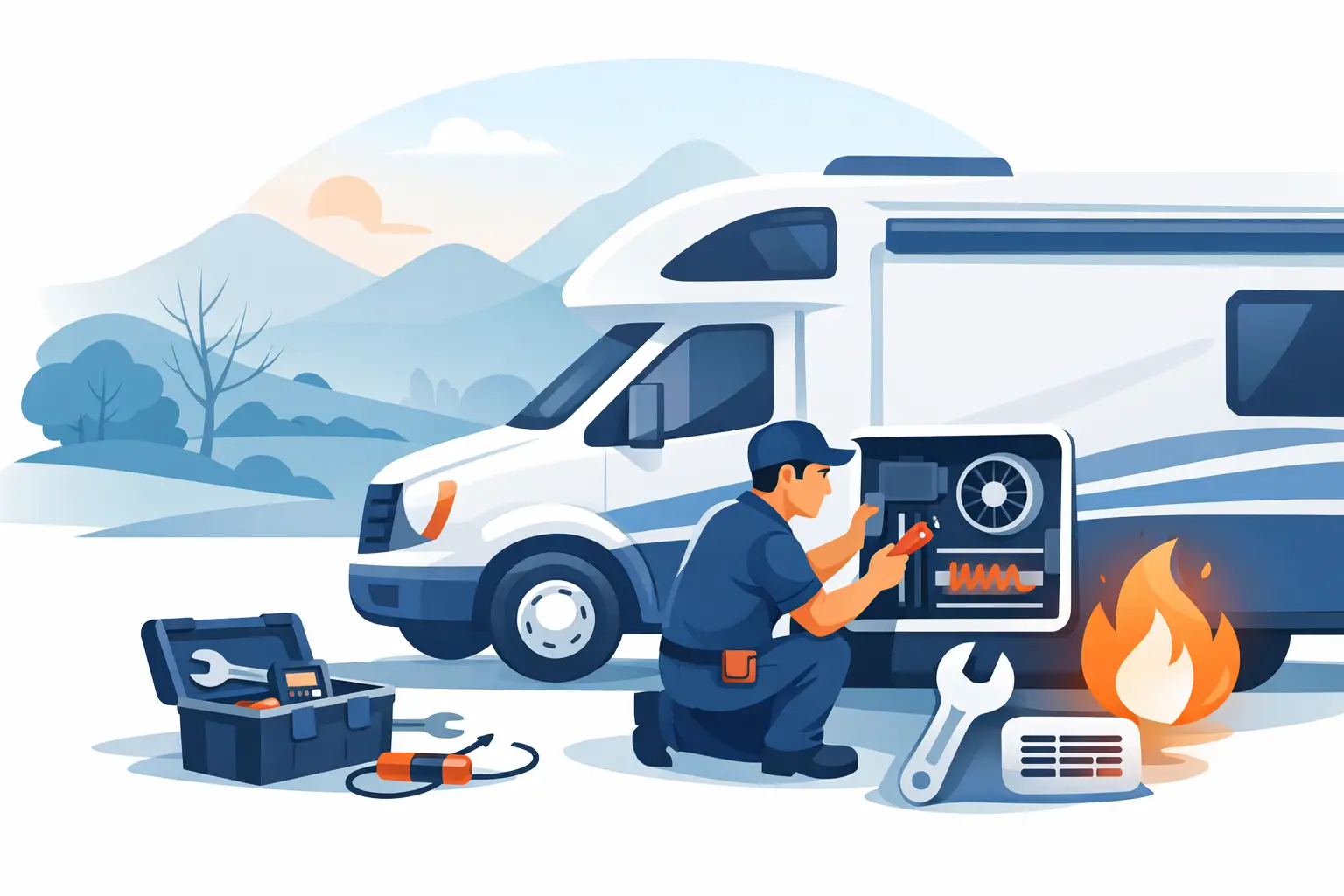
RV Furnace Repair Knoxville for Reliable Heat
A cold Tennessee night can turn a planned campground stay into a long, uncomfortable problem fast. When you need rv furnace repair Knoxville owners can rely on, the goal is not simply to get warm air moving again. It is to make sure your furnace is operating safely, your batteries and propane system are supporting it correctly, and your RV is ready for the next mile.
RV furnaces are dependable appliances when they receive regular attention, but they depend on several systems working together. A weak battery, low propane pressure, blocked exterior vent, dirty sail switch, or failing control board can all leave a camper, travel trailer, or fifth wheel without heat. The symptoms may look similar, but the repair is not always the same.
What Your RV Furnace Is Trying to Tell You
Most furnace problems begin with a small change that is easy to overlook. Perhaps the furnace starts but shuts down before the cabin warms up. Maybe the fan runs without producing heat, or the unit clicks repeatedly and never lights. Some owners notice an unusual smell, soot near the exhaust, or a furnace that works reliably at home but struggles at a campground.
Those signs deserve attention before the next cold snap. An RV furnace uses 12-volt power to run its blower and controls, even when propane provides the heat. That means a furnace can fail because of a battery or converter issue even when the propane tank is full. It is one reason guessing at the problem can lead to unnecessary parts and more frustration.
A furnace that will not start may have a thermostat issue, blown fuse, low battery voltage, or a restriction at the intake or exhaust. If the blower starts but the burner does not ignite, the cause could involve propane flow, the igniter, the sail switch, or the gas valve. If it lights and then quits, a safety switch, airflow issue, or flame-sensing concern may be involved.
When an RV Furnace Problem Is a Safety Concern
Do not keep cycling a furnace that smells strongly of propane, produces smoke, leaves soot around the exterior vent, or causes a carbon monoxide alarm to sound. Turn the furnace off, shut off the propane supply if it is safe to do so, ventilate the RV, and get professional help.
Carbon monoxide and propane detectors should be tested regularly, especially before a fall or winter trip. These alarms are not optional accessories. They are a critical part of safe RV living. Replace their batteries as required and pay attention to their expiration dates, since detectors do not last forever.
A light dusty smell when a furnace first runs after months of storage can be normal, but it should clear quickly. Persistent burning odors, loud grinding, repeated ignition attempts, or a yellow-looking flame are not normal operating conditions. A repair visit can identify whether the issue is minor maintenance or a condition that should keep the furnace out of service.
Why Mobile RV Furnace Repair Makes Sense in Knoxville
Getting a large RV to a repair shop is not always practical. If your furnace fails at a campground, storage lot, driveway, or during a stay near Townsend, Lenoir City, Maryville, Alcoa, Tellico Village, or Knoxville, moving the RV may add another problem to an already stressful day.
Mobile service brings the diagnostic process to the RV. That matters because a technician can see the actual power setup, propane supply, exterior venting, thermostat settings, and conditions where the failure occurred. An issue that appears to be a furnace problem may turn out to be a discharged house battery, corroded connection, tripped breaker, regulator concern, or incorrect thermostat setting.
Time In Season Mobile RV Repair comes to your location to help take the burden of transport off your shoulders. For many owners, that means less time trying to arrange a tow or find a shop that can accommodate a fifth wheel and more time getting a clear answer about what is wrong.
Common Furnace Repairs and What They Involve
Every furnace model has its own components and access points, but most service calls fall into a few practical categories. The right repair depends on the diagnosis, not just the symptom.
Low 12-Volt Power and Electrical Problems
A furnace blower needs adequate 12-volt power to start and maintain proper airflow. Weak batteries can cause slow fan speed, failed ignition cycles, or a furnace that shuts down unexpectedly. Loose wiring, bad grounds, damaged fuses, and converter problems can create similar symptoms.
This is especially common after an RV has been sitting in storage or when owners are dry camping. Checking voltage under load is more useful than assuming a battery is healthy because it showed a normal reading at rest.
Propane Flow and Ignition Issues
A full propane tank does not guarantee proper fuel delivery. A regulator can malfunction, a valve may not be fully open, or an obstruction can affect the furnace supply. Ignition components, burner assemblies, and gas valves also need to work in the correct sequence.
Propane-related repairs should be handled carefully. The trade-off between trying a quick do-it-yourself adjustment and scheduling service is simple: a minor issue may be easy to correct, but fuel-system mistakes are not worth the risk.
Airflow Restrictions and Dirty Components
Your furnace uses airflow as a safety check. If the blower cannot move enough air, the sail switch may not close and the burner will not ignite. Dust, pet hair, insect nests, debris around exterior vents, and worn blower components can all interfere with operation.
In East Tennessee, wasps and other insects can create trouble in appliance vents during storage. A visual inspection of the exterior furnace intake and exhaust is a sensible part of your pre-trip routine, but avoid poking tools deep into the vent or damaging the screen.
Thermostat and Control Board Failures
Sometimes the furnace is ready to run, but it never receives the right signal. A thermostat, wiring connection, relay, or control board can prevent the correct startup sequence. These failures are often frustrating because the furnace may work intermittently before quitting altogether.
A proper diagnosis checks the sequence from thermostat call to blower operation, ignition, burner flame, and safety shutdown. Replacing parts without testing can get expensive quickly, particularly with electronic controls.
A Few Checks You Can Make Before Calling
If there is no smell of propane, no alarm, and no visible sign of unsafe operation, start with the basics. Confirm the thermostat is set to furnace mode and above the current room temperature. Verify the house battery has a solid charge, propane is turned on, and the furnace fuse has not blown.
Next, look at the exterior furnace vent for mud, leaves, nests, or other obvious blockage. Listen carefully when you call for heat. Does nothing happen? Does only the blower run? Does the unit click and try to light? Those details help narrow the issue and can make a service visit more efficient.
Do not bypass safety switches, repeatedly reset a tripped fuse, or disassemble propane components to chase a fast fix. RV furnace systems are compact, but they are not simple. Safety components are designed to stop the appliance when something is not right.
Prevent Furnace Trouble Before Cold Weather Arrives
The best time to inspect an RV furnace is before you need it. Run the furnace during a mild day before a fall trip, then let it complete several normal heating cycles. This gives you time to address weak batteries, odd noises, poor airflow, or ignition problems without losing heat on a cold night.
Seasonal maintenance should also include checking detector operation, inspecting the exterior vent, confirming battery condition, and reviewing propane levels. If your RV has been winterized or stored for several months, test the furnace before you load up for a trip to the Smokies.
Maintenance does not guarantee that a part will never fail. Age, usage, road vibration, moisture, and storage conditions all matter. It does, however, make surprise breakdowns less likely and helps protect the comfort and safety of everyone traveling with you.
Questions RV Owners Commonly Ask
Why does my furnace fan run but there is no heat?
The blower must run before the furnace attempts ignition. If it continues running without heat, the cause may be low propane flow, a dirty or failed sail switch, an igniter problem, a gas valve issue, or a control-board fault. Testing the startup sequence is the safest way to identify the cause.
Can my RV furnace work when I am plugged into shore power?
Yes, but most RV furnaces still rely on 12-volt DC power for their controls and blower. Shore power supports the converter or charger, which helps maintain the battery system. If the 12-volt side has a problem, being plugged in may not solve it.
How often should I have my furnace checked?
A yearly pre-season check is a practical baseline, especially for RVs that sit unused for part of the year. Owners who travel often, camp in colder weather, or keep pets in the RV may benefit from more frequent inspection because debris and wear can build up faster.
Warmth in an RV is about more than comfort. Before your next chilly night in the mountains or at your favorite local campground, make sure your furnace has the power, fuel, airflow, and professional attention it needs to keep your home on wheels safe and ready to go.