
RV Inverter Versus Converter: What Runs What?
A dead outlet at the campground can feel like a major electrical failure. Sometimes, though, the problem comes down to understanding the RV inverter versus converter setup already built into your camper, travel trailer, or fifth wheel. These two devices work in opposite directions, and knowing which one handles which job can save you time, protect your batteries, and make it easier to describe the issue when you need service.
RV inverter versus converter: the basic difference
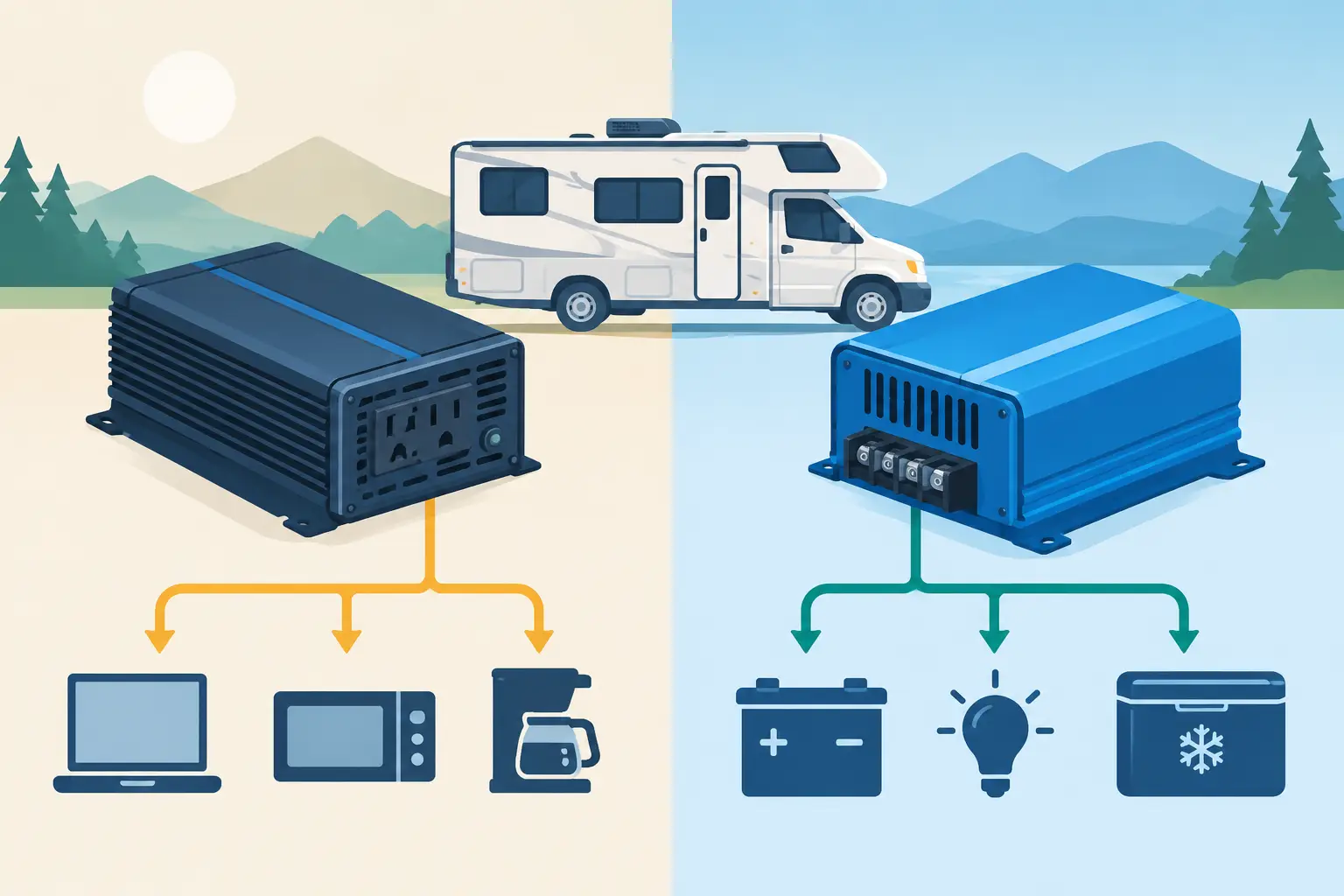
An RV converter takes 120-volt AC power from shore power or a generator and changes it into 12-volt DC power. That 12-volt power operates many everyday RV systems, including interior lights, vent fans, water pumps, furnace controls, slide-outs, and the control boards in many appliances. The converter also charges your house batteries while you are plugged in.
An RV inverter does the reverse. It takes 12-volt DC power stored in your batteries and changes it into 120-volt AC power, the type used by standard household-style outlets and appliances. An inverter lets you run selected AC items without being connected to shore power or a generator.
The simple version is this: a converter keeps 12-volt systems and batteries working when outside AC power is available. An inverter gives you some AC power when outside power is not available.
Most RVs have a converter. Not every RV has an inverter, especially older or simpler campers. Some newer units have an inverter/charger combination that performs both jobs in one piece of equipment.
What your converter does when you are plugged in
When you connect your RV to campground power, a home outlet, or a generator, AC power enters through the shore cord and passes through the electrical distribution system. Circuit breakers protect the 120-volt side of the RV. The converter then supplies DC power to the 12-volt fuse panel and charges the house battery bank.
That means your RV’s lights may still work even if the batteries are weak, as long as the converter is operating and you are plugged in. It also explains why a battery can gradually go flat while sitting at a campsite if the converter is not charging correctly.
Modern multi-stage converters are designed to charge batteries at different rates as needed. They provide stronger charging when batteries are low, then reduce the charge rate as batteries recover. This matters because chronic overcharging can shorten battery life, while undercharging leaves batteries unable to carry the load when you disconnect from shore power.
A converter does not create 120-volt outlet power from your batteries. If your TV outlet, microwave, or coffee maker will not run while unplugged, installing or repairing a converter will not solve that particular problem. That job belongs to an inverter, provided the RV has one and the battery bank is capable of supporting the load.
What an inverter can power off-grid
An inverter can make battery power useful for smaller AC loads when you are boondocking, stopped for lunch, or parked somewhere without hookups. Depending on its size and how it is wired, an inverter may power a few dedicated outlets, an entertainment center, a residential refrigerator, or selected circuits in the RV.
What it can safely run depends on three things: the inverter’s watt rating, your available battery capacity, and the size of the appliance load. A phone charger or laptop uses relatively little power. A microwave, hair dryer, space heater, air conditioner, or coffee maker can drain batteries quickly and may overload a smaller inverter.
For example, a 1,500-watt inverter may be enough for many common light-duty needs, but it does not mean you can run every appliance at once. Batteries must deliver significant current to make AC power, and that demand increases as the appliance load rises. Heavy inverter use can drain a modest battery bank far faster than many RV owners expect.
An inverter also has an idle draw. Even when nothing is plugged in, it may use some battery power simply by being switched on. If your RV will sit in storage, turn the inverter off unless you have a reason to keep it operating.
Why an RV may have both devices
Having both a converter and inverter is normal because they support different camping situations. Plugged into shore power, the converter supplies 12-volt power and replenishes the batteries. Away from hookups, the inverter can turn battery power into usable 120-volt power for selected needs.
A combination inverter/charger is common in RVs set up for extended off-grid travel, lithium battery upgrades, or solar systems. It can charge batteries from shore power and invert battery power when shore power is unavailable. Many units also transfer between power sources automatically.
Even so, a combination unit is not a guarantee that every outlet or appliance will work from batteries. RV manufacturers may wire only certain circuits through the inverter. The microwave, air conditioner, electric water-heater element, or other high-demand equipment may remain shore-power or generator only. Your RV’s wiring layout matters as much as the inverter’s label.
Signs the converter may need attention
Converter trouble often shows up first as a battery problem. You may be plugged into power for hours or days, yet the house battery remains low. Lights may become dim after unplugging, the water pump may run slowly, or the furnace may refuse to start because the battery voltage has dropped too far.
Other warning signs include a burning smell near the electrical panel, a cooling fan that runs constantly or never runs, repeatedly blown 12-volt fuses, or unusual battery heat. Corroded battery terminals, a failing battery disconnect switch, damaged wiring, and bad batteries can cause similar symptoms, so the converter should not be blamed without a proper diagnosis.
If your RV has flooded lead-acid batteries, check the water level only when it is safe and according to the battery manufacturer’s guidance. Low electrolyte levels can cause charging trouble and battery damage. Sealed AGM and lithium batteries have different charging needs, which is one reason a battery upgrade should include a check of the existing converter or charger settings.
Signs the inverter may be the problem
An inverter issue usually appears when you are not connected to shore power. Perhaps the inverter display shows a fault code, it alarms as soon as you turn on a load, or the outlets it controls have no power even though batteries appear charged.
Start with the straightforward checks: confirm the inverter is switched on, check its DC fuse or breaker, inspect the battery disconnect position, and make sure the batteries have adequate voltage. Many inverters shut down automatically when voltage falls too low, protecting batteries from severe discharge. An overloaded inverter may also trip or display an overload message.
Do not overlook GFCI outlets. In many RVs, one tripped GFCI receptacle can disable several outlets farther down the circuit. A tripped AC breaker or inverter subpanel breaker can create the same no-power complaint.
If cables are loose, batteries are hot or swollen, there is a burnt odor, or electrical power is cutting in and out, stop using the system until it can be inspected. High-current DC wiring deserves the same respect as household electrical work. Disconnecting the wrong cable or replacing a fuse with the wrong size can damage equipment or create a fire risk.
Protecting batteries and electrical equipment
The best electrical habit is to match your power use to your available power source. When plugged into shore power, confirm the converter is actually charging the batteries instead of assuming it is. When running on batteries, keep a close eye on battery voltage or state of charge and avoid high-wattage appliances unless your inverter and battery bank are designed for them.
Before a trip, test the basics: interior lights, water pump, furnace, battery monitor, GFCI outlets, shore power connection, and inverter operation if equipped. In East Tennessee, a long storage period, humid weather, campground power fluctuations, and a last-minute trip can expose a weakness that was not obvious at home.
If your RV electrical system is not behaving the way it should, a mobile technician can diagnose the converter, inverter, batteries, breakers, fuses, wiring, and charging source where the RV is parked. Time In Season Mobile RV Repair comes to RV owners around Maryville, Knoxville, Townsend, Tellico Village, and surrounding communities, so you do not have to tow a trailer with an electrical issue across town.
Before your next departure, plug in, check the battery charge, and test the outlets you expect to use. A few minutes in the driveway is far better than discovering a power problem after the campground office has closed.