
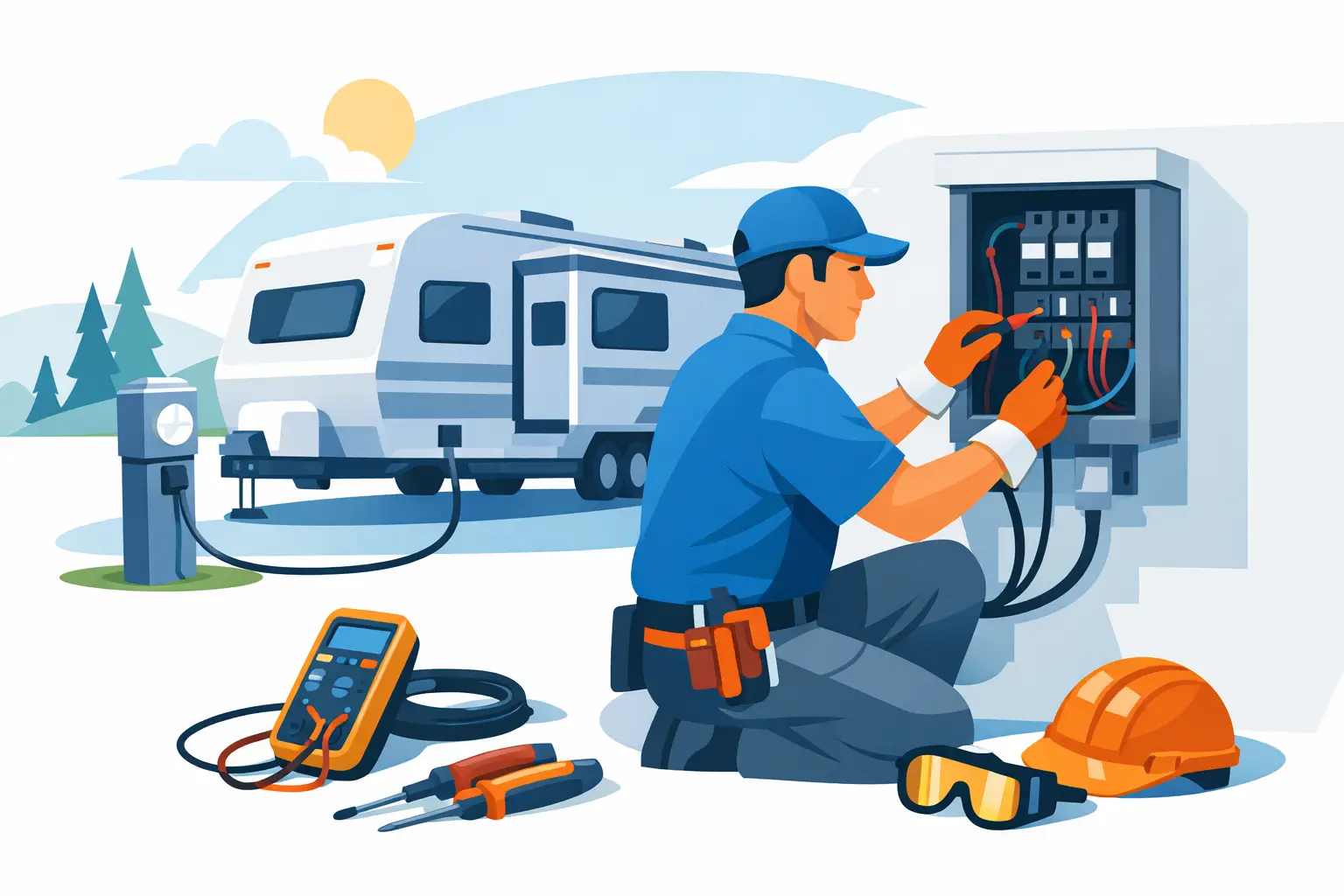
110 Volt RV Electrical Repair Done Safely
A refrigerator that suddenly quits cooling, outlets that go dead, or an air conditioner that will not start can turn a relaxing RV stay into a stressful one fast. 110 volt rv electrical repair is often needed when shore power is reaching the RV but appliances, outlets, or major systems are not working as they should. The good news is that many power problems have a clear cause. The safer news is that you do not need to take apart an electrical panel to find it.
Your RV’s 110-volt system powers the same type of household-style equipment you use at home, but it has to operate through campground pedestals, shore cords, breakers, GFCI outlets, transfer equipment, and sometimes an inverter. One loose connection or tripped safety device can interrupt the whole chain. A careful check can help you identify the issue, protect your equipment, and know when it is time to call for hands-on repair.
How Your RV’s 110-Volt Power Works
When plugged into a campground pedestal or a home outlet, your RV receives 120-volt alternating-current power, commonly called 110 volts. That power enters through the shore power cord, passes through the main breaker panel, and travels to outlets and appliances such as the microwave, air conditioner, water heater electric element, converter, and refrigerator.
Your 12-volt system is different. It runs lights, vent fans, the water pump, and many control boards from the battery bank. The converter uses incoming 110-volt power to recharge those batteries and support the 12-volt side. That overlap can make troubleshooting confusing. For example, dead interior lights may point to a battery or converter concern, while a dead microwave and outlets usually point to the 110-volt side.
Before assuming an appliance has failed, start with the power source. A working campground pedestal does not automatically mean the RV is receiving correct, stable power.
Safe Checks Before Calling for 110 Volt RV Electrical Repair
Start by reducing the load. Turn off the air conditioner, electric water heater, microwave, space heaters, and other high-draw appliances. If a breaker has tripped, resetting it while those loads are still running may cause it to trip again immediately.
First, inspect the campground pedestal or home receptacle. Confirm the pedestal breaker is switched on and that your plug is fully seated. If you are using an adapter to plug a 30-amp RV into a household outlet, remember that a standard household circuit cannot safely carry the same load as a 30-amp RV connection. It may run a battery charger and a few small items, but it is not the place to run an air conditioner or several appliances at once.
Next, look over the shore power cord and plug without touching exposed metal or damaged areas. Stop using the connection if you see melted plastic, discoloration, cracked insulation, loose prongs, or a burned smell. These are signs of heat buildup, and continuing to use the cord can damage the RV inlet or create a fire risk.
Then check your RV’s breaker panel. A tripped breaker may not look fully off. Push it firmly to the off position before resetting it to on. If it trips again, leave it off. A repeatedly tripping breaker is doing its job by responding to an overload, a short, or a failing appliance.
Finally, find and reset the GFCI outlet. In many campers, travel trailers, and fifth wheels, one GFCI outlet protects multiple outlets in the kitchen, bathroom, exterior compartment, or patio area. If exterior outlets and a bathroom outlet are both dead, a tripped GFCI is a likely suspect. Press the reset button only after unplugging anything connected to the affected outlets.
Signs the Problem Is More Than a Reset
A simple reset can solve a minor interruption, but certain symptoms call for professional diagnosis. Power that comes and goes, breakers that trip under normal use, buzzing from the panel, or an outlet that feels warm are not problems to ignore.
Voltage problems can also be hard on expensive RV equipment. Low voltage at a crowded campground may cause an air conditioner to struggle, hum, or fail to start. High voltage or a poor neutral connection can damage appliances and electronics. A quality surge protector or electrical management system helps monitor incoming power, but it cannot repair damaged wiring inside the RV.
If you have power only on one side of the RV, the cause may be a branch breaker, GFCI, loose outlet connection, or wiring issue. If nothing works on shore power but your batteries still operate the lights and water pump, the concern may be at the pedestal, cord, inlet, main breaker, transfer switch, or converter supply. The exact answer depends on your RV’s setup and whether it has a generator or inverter.
Common RV 110-Volt Electrical Problems
Shore cords and RV inlets are common trouble spots because they handle high electrical load and live outdoors. A loose plug connection creates resistance. Resistance creates heat, and heat can burn terminals long before the entire system stops working.
GFCI failures are another frequent issue, especially after rain, washing the RV, or using exterior outlets. Moisture inside an outlet box, a faulty appliance, or an aging GFCI can cause repeated trips. Resetting it once is reasonable. Resetting it over and over is not a repair.
Air conditioner problems often get blamed on the AC unit when the real issue is electrical supply. A weak pedestal connection, undersized extension cord, failing capacitor, damaged breaker, or low voltage can keep the unit from starting. Since air conditioners draw substantial power, they deserve a proper diagnosis rather than repeated attempts to force them on.
The converter is another key component. If it fails, your RV may still have 110-volt power at some outlets, but the batteries may not charge and 12-volt equipment may begin to fade. Conversely, a battery issue can make it seem like the whole RV is without power even though the shore connection is fine.
When to Stop Troubleshooting
There is a clear line between safe owner checks and electrical work that should be left to a qualified RV technician. Do not remove the breaker panel cover, open a transfer switch, repair a shore cord with tape, bypass a breaker, or replace wiring based on a guess. RV electrical systems can retain hazards even after unplugging, particularly around capacitors, inverters, generators, and battery banks.
Call for help right away if you notice smoke, sparks, melted components, a burning odor, shock or tingling from the RV exterior, or a breaker that will not stay on. Unplug shore power if it can be done safely, turn off the pedestal breaker first when possible, and keep everyone away from the affected area.
For RV owners around Maryville, Knoxville, Townsend, Tellico Village, Lenoir City, and nearby communities, mobile service can save the trouble of moving a large trailer or fifth wheel to a shop. Time In Season Mobile RV Repair can come to your home, campground, storage site, or roadside location to trace the fault, make appropriate repairs, and test the system under normal load.
Preventing the Next Electrical Interruption
A few habits go a long way. Use a properly rated surge protector or electrical management system at the pedestal. Keep shore cord connections clean, dry, and fully supported so the plug does not hang under its own weight. Avoid lightweight extension cords for high-draw appliances, and do not run more electrical load than your service can support.
Before a trip, test GFCI outlets, inspect the shore cord and inlet, and make sure breakers operate normally. During seasonal maintenance, have the electrical system checked for loose connections, heat damage, aging outlets, and converter performance. Those small inspections are often far less disruptive than finding a power problem after the sun goes down at the campground.
Your RV should feel like a place to settle in, not a place to worry about which outlet might fail next. When power acts unpredictably, a safe diagnosis and a proper repair help protect your trip, your appliances, and the people traveling with you.