
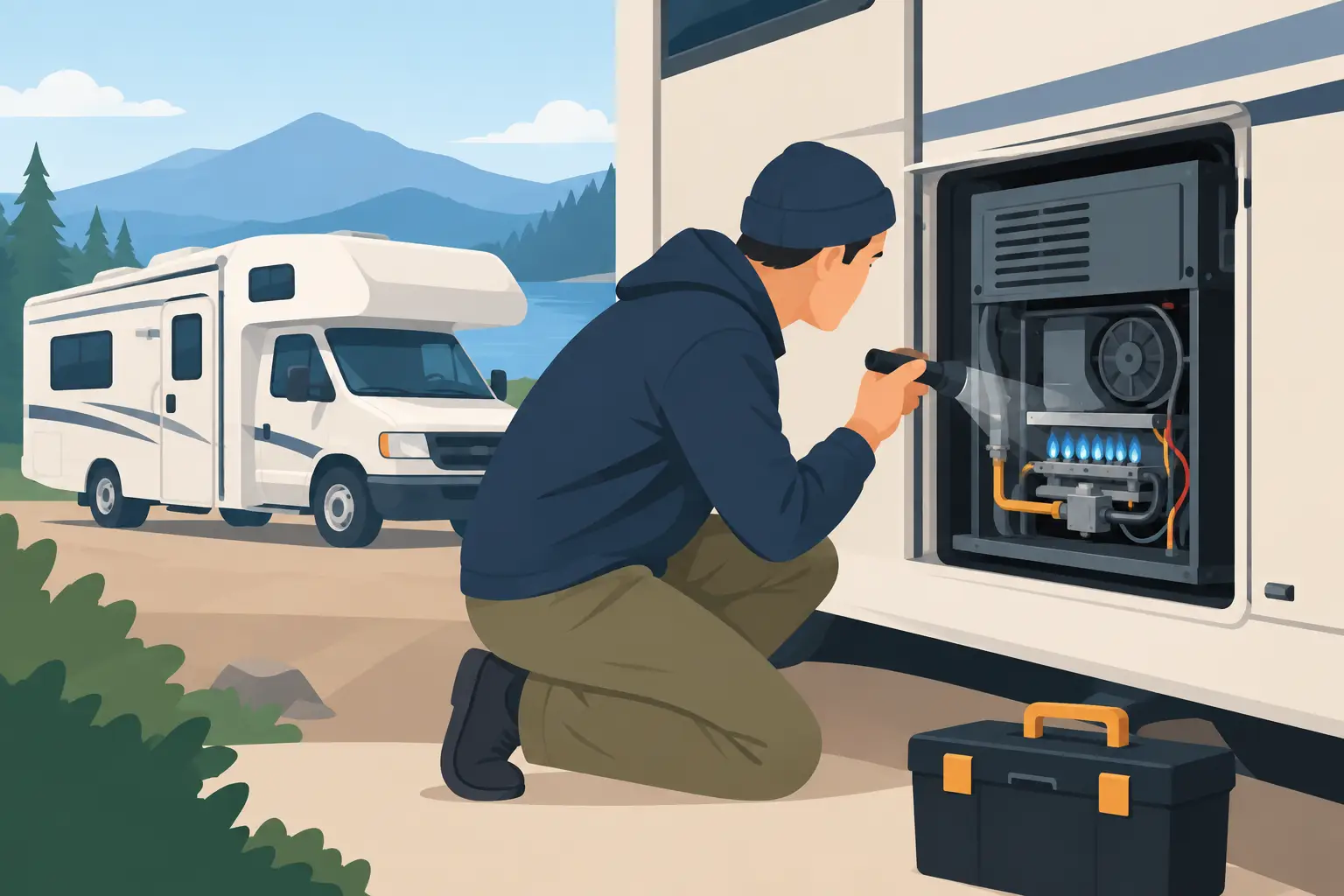
RV Furnace Failure: What to Check Before Calling
A cold RV at midnight is more than an inconvenience, especially during a Tennessee cold snap or a weekend in the Smokies. An RV furnace failure can disrupt a family trip, make a seasonal stay uncomfortable, and leave you wondering whether the problem is propane, power, a thermostat, or something more serious. The good news is that many furnace issues have clear warning signs. The important part is knowing what you can safely check and when to stop troubleshooting.
What an RV Furnace Failure Usually Looks Like
RV furnaces do not always fail the same way. Sometimes the thermostat calls for heat and nothing happens. Other times, the blower starts but the furnace never produces warm air. You may also hear repeated clicking as it tries to ignite, smell propane, or find that it runs for a few minutes before shutting down.
Those symptoms matter because an RV furnace needs several systems to work in the right order. It needs adequate 12-volt battery power to run the blower and circuit board, propane to fuel the burner, proper airflow through the intake and exhaust, and a functioning thermostat and safety switch. A problem in any one of those areas can keep the furnace from heating.
If you smell raw propane, see soot around the exterior furnace vent, or suspect a damaged gas line, turn the furnace off immediately. Shut off propane at the tank if it is safe to do so, open windows and doors for ventilation, and avoid flames, smoking, or operating electrical switches nearby. That is not a situation for trial-and-error repairs.
Safe Checks to Make Before You Schedule Repair
A few basic checks may save a service call or give your technician a better starting point. Start with the thermostat. Confirm it is set to Furnace or Heat, the temperature setting is higher than the current indoor temperature, and any thermostat batteries are fresh if your model uses them. A simple setting issue can look exactly like a furnace breakdown.
Next, check your RV battery condition. Even when plugged into shore power, the furnace blower typically relies on the 12-volt system. A weak battery, blown fuse, loose battery connection, or converter problem may allow a light to work while still failing to provide enough power for the furnace to start and complete its ignition cycle.
Then verify that propane is available. Check that the tank valve is open and that there is fuel in the tank. If other propane appliances, such as the stove, will not light, the furnace is not likely to run either. After changing tanks or turning propane back on, it can take a short time for air to clear from the lines. Do not repeatedly cycle the furnace over and over, though. Repeated unsuccessful ignition attempts can drain the battery and do not fix an underlying issue.
Finally, look at the exterior furnace vent. Mud daubers, leaves, road debris, insect nests, or snow can block airflow around the intake or exhaust. Do not insert tools into the vent or disassemble furnace components from outside. A visual inspection and gentle removal of loose debris around the cover is enough for the owner. Internal burner, sail switch, and electrical work should be handled by a qualified RV technician.
Why the Blower Runs but There Is No Heat
One of the most common RV furnace failure calls begins with, “I can hear it running, but it is blowing cold air.” In this case, the blower is operating, but the burner is not lighting or is not staying lit.
A dirty or sticking sail switch is a frequent cause. This small safety switch confirms that the blower is moving enough air before the furnace is allowed to ignite. Dust, pet hair, aging components, or restricted ducting can keep it from closing properly. Because the switch is part of the furnace safety sequence, bypassing it is never a safe fix.
Ignition and flame-sensing problems can produce similar symptoms. The furnace may click as it attempts to light, then shut down because it does not detect a stable flame. Causes can include a dirty burner area, corroded electrical connections, a failing igniter, low propane pressure, or an issue with the control board.
The return-air opening and supply vents also deserve attention. Furniture, storage bins, rugs, or pet bedding can restrict airflow in a compact camper or trailer. Keep those openings clear, especially during a longer stay when it is tempting to use every available inch of floor space.
When the Furnace Will Not Start at All
If there is no blower sound after you adjust the thermostat, start with the basics: thermostat settings, the 12-volt fuse panel, battery charge, and battery disconnect switch. Some RVs have more than one fuse or breaker involved in the heating circuit, so a furnace-specific fuse may be intact while another 12-volt supply issue remains.
A furnace that does absolutely nothing may also have a failed thermostat, damaged wiring, a loose connection, or a control board problem. These faults can be difficult to isolate without the right meter, wiring information, and access to the furnace. In a fifth wheel or travel trailer, the furnace may be installed behind cabinetry, under a refrigerator, or in another cramped location. Forcing access panels or guessing at wiring can turn a repairable problem into a larger one.
Do Not Ignore These Furnace Warning Signs
Some furnace problems should move to the top of your repair list, even if the unit still produces heat occasionally. Stop using the furnace and arrange service if you notice a propane odor, a persistent burning smell, black soot near the exterior vent, unusual booming or rumbling at ignition, repeated shutdowns, melted wiring, or a carbon monoxide alarm.
Every RV with propane appliances should have working propane and carbon monoxide detectors. Test them regularly, replace batteries as needed, and follow the detector manufacturer’s replacement schedule. Detectors do not prevent a furnace problem, but they provide a critical warning when combustion gases or propane may be present.
Portable electric heaters can offer temporary comfort when used carefully, but they are not an automatic replacement for the RV furnace. They require a properly rated electrical source, clear space around the heater, and close attention to avoid overloading campground power or RV circuits. In freezing weather, a furnace issue can also affect your plumbing because the furnace may help protect enclosed tanks and water lines. A space heater may warm the living area while leaving vulnerable compartments cold.
Preventing Furnace Trouble Before Cold Weather
Furnace maintenance is easier when it happens before the first cold night. During seasonal preparation, inspect the exterior vent for nests and debris, test the thermostat, confirm that propane tanks are secure and in date, and make sure your battery holds a charge. Run the furnace long enough to confirm it starts, ignites, and cycles off normally.
It also helps to keep the RV clean around return-air openings and floor ducts. Pet hair and dust are common in campers, particularly after a busy travel season. If your furnace has a service history of intermittent starts, weak airflow, or ignition problems, address it before you leave for a trip rather than hoping it will work when temperatures drop.
A professional RV furnace service can inspect the burner area, safety switches, electrical connections, airflow, and overall operation. The right repair depends on the symptom and the furnace model. Sometimes the solution is minor, such as correcting a connection or clearing an obstruction. Other times, a worn component or control issue needs replacement. Accurate diagnosis helps avoid replacing parts that were never the problem.
Mobile Help When Your RV Cannot Come to the Shop
A furnace problem is especially frustrating when your trailer is set up at home, parked in storage, or settled into a campground. Moving a large RV to a repair facility is not always practical, and it can be impossible if the weather is already bad. Mobile service brings the diagnostic work to your location, whether you are in Maryville, Alcoa, Knoxville, Townsend, Tellico Village, or a nearby campground.
Time In Season Mobile RV Repair can inspect RV furnace concerns where your camper, travel trailer, or fifth wheel is parked. A hands-on diagnosis can identify whether the issue is related to propane delivery, 12-volt power, airflow, ignition, controls, or another part of the heating system. That means less guessing, less hauling, and a clearer path back to a warm, usable RV.
Before the next cold front arrives, run your furnace once, listen to its normal startup sequence, and address anything that seems different. A quick check while you are safely parked is much easier than discovering a heating problem after dark, miles from home.