
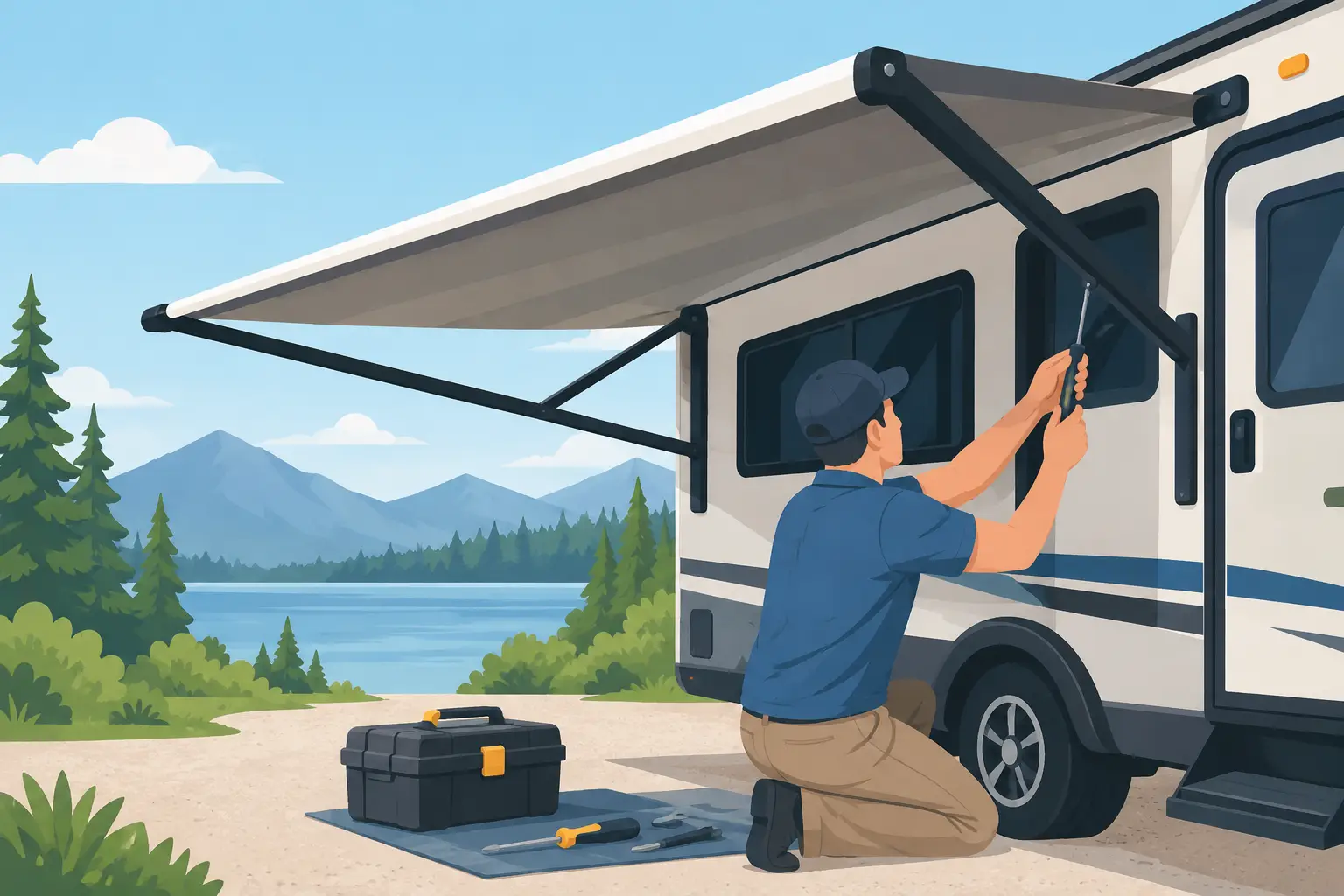
How to Fix RV Awning Problems Without Guesswork
An RV awning can go from a welcome patch of shade to a frustrating problem in one windy afternoon. Fabric that will not roll in straight, an arm that will not lock, or a powered awning that stops halfway can disrupt a campground stay and leave your RV exposed to the weather. Knowing how to fix RV awning issues starts with identifying which part has failed – the fabric, the roller tube, the support arms, or the power system.
Before reaching for tools, resist the urge to force the awning closed. Awning springs and arms carry more tension than they appear to, and a small alignment problem can become a bent arm, torn fabric, or damaged RV sidewall if it is handled roughly.
Start With a Safe RV Awning Inspection
Park on level ground, set the parking brake, and make sure there is enough room to fully extend the awning. If wind is blowing, wait for calmer conditions. Even a light gust can catch the canopy and pull the arms unexpectedly.
Look first for the obvious source of trouble. Check whether the fabric is torn, loose in its track, bunched around the roller tube, or sagging with rainwater. Then inspect the support arms for bends, cracked plastic parts, loose mounting screws, and damaged locking tabs. On power awnings, listen for a motor that hums, clicks, or runs without moving the awning.
It also helps to check the coach-side rail, sometimes called the awning track. Leaves, pine needles, old sealant, and debris can keep fabric from sliding properly. If the fabric is still intact and the frame is straight, a careful cleaning and adjustment may be all that is needed.
How to Fix RV Awning Fabric That Is Loose or Uneven
A common problem is fabric that rolls up crooked or starts slipping out of the track. This often happens after a windy trip, a low-hanging branch strike, or years of regular use. If the fabric has shifted only slightly, extend the awning several feet and inspect both edges where the fabric enters the rail and roller tube.
Clean loose dirt from the tracks with a soft brush and mild soap and water. Avoid petroleum-based cleaners, which can harm vinyl fabric and leave residue that attracts more grime. Let the awning dry completely before rolling it in again.
If one side of the fabric is pulling farther than the other, gently guide the fabric back toward center while a second person slowly retracts the awning. Do not pull hard against the roller. The goal is to correct a minor tracking issue, not fight the spring tension inside the tube.
Small holes and tears can sometimes be patched with an RV awning repair tape made for vinyl or acrylic fabric. Clean and dry the area first, then apply a patch on both sides when possible. A patch can buy useful time, but it is not always a long-term answer. Fabric that is brittle, badly mildewed, or torn along the bead that slides into the track generally needs replacement.
Replacing fabric is a manageable job for experienced owners with a helper, but it is not a simple one-person project. The roller tube contains a tensioned spring, and incorrect handling can cause injury or damage to the RV. If you are unsure, mobile repair is the safer route.
Repairing Bent, Sticking, or Loose Awning Arms
Manual awning arms take the most abuse. They are exposed to wind, road vibration, moisture, and repeated opening and closing. A sticking arm may simply need cleaning and lubrication, while a bent arm or broken lock usually requires a replacement part.
Start by wiping dirt from the telescoping sections and pivot points. Apply a dry silicone lubricant sparingly to moving metal sections and locks. Do not soak the fabric or allow lubricant to drip onto the RV wall. Open and close the arm slowly to see whether it moves more freely.
Tighten loose mounting screws only after checking the surrounding wall for signs of water damage. If screws spin freely, pull out, or sit in soft material, the mounting area may have hidden rot behind it. Tightening hardware into damaged backing will not hold for long and can make the repair more involved later.
Do not try to straighten a significantly bent arm by hand. Aluminum can weaken or crack after it has been bent, even if it looks straight again. A weakened arm may fail without warning in wind or while the awning is extended. Replacing the damaged arm is usually the dependable repair.
If an awning will not stay open, inspect the rafter locks and support arm locks for worn teeth, cracks, or missing springs. Those small parts do real work. A lock that slips can allow the awning to collapse or shift suddenly.
Troubleshooting a Power RV Awning That Will Not Move
A power awning adds convenience, but the problem can be mechanical or electrical. Begin with the basics: confirm the RV battery has adequate charge, check the appropriate fuse or circuit breaker, and make sure any battery disconnect switch is on. Some RVs require the ignition to be in a specific position or a control panel to be powered up before exterior accessories will operate.
If the switch does nothing, inspect visible wiring near the awning arms for pinched, cut, or loose connections. If the motor hums but the tube does not turn, the motor gear or internal drive component may be stripped. If the awning moves a few inches and stops, the fabric may be binding, the arms may be out of alignment, or the motor may be losing power under load.
Avoid repeatedly holding the switch when the awning is stuck. That can overheat the motor and turn a repairable issue into a motor replacement. Also avoid bypassing fuses or jumping wires unless you are trained to diagnose 12-volt electrical systems. RV wiring is often routed behind walls and under trim, where an incorrect repair can create a larger problem.
When Water, Wind, or Age Changes the Repair Plan
Not every awning issue has the same fix. A clean fabric with one small tear may be worth patching. An older awning with faded, cracked material and loose seams is often better served by replacement fabric. Likewise, a single worn lock can be replaced, while multiple bent components may make a full arm assembly the more reliable choice.
Water damage deserves special attention. If the awning rail is pulling away from the RV, sealant is cracked, or staining appears inside near the mounting area, stop using the awning until the wall and roofline can be inspected. The awning itself may be the visible problem, but the greater concern is water getting behind the exterior skin.
Wind damage can also hide in plain sight. Even if the awning still retracts, look for twisted brackets, uneven gaps between arms, and fabric that no longer rolls evenly. A quick test in the driveway can prevent the awning from jamming during your next trip.
Prevent Future RV Awning Repairs
The best way to protect an awning is to treat it like the large sail it is. Never leave it extended when you leave the campsite, and retract it before storms or strong gusts arrive. Use proper tie-downs only when they are designed for your awning style and conditions, since overly tight straps can stress the arms and mounting points.
Keep the fabric clean, clear debris from the rail, and inspect seams and hardware during seasonal RV maintenance. Make sure rainwater is not pooling on the canopy. Most awnings can be tilted to encourage runoff, but follow the manufacturer’s directions for your specific model.
For RV owners around Maryville, Knoxville, Townsend, Tellico Village, and nearby East Tennessee communities, an awning that will not retract is especially stressful when the RV is parked at home, in storage, or at a campground. Time In Season Mobile RV Repair can inspect the problem where your RV sits, whether it needs fabric work, arm replacement, electrical diagnosis, or help securing the awning safely.
If the awning is bent, stuck open, pulling away from the RV, or showing signs of electrical trouble, protecting the RV matters more than getting it closed quickly. Secure the area, avoid forcing the mechanism, and get dependable help before the next stretch of wind or rain turns a manageable repair into a damaged trip.