
Camper Electrical System Guide for RV Owners
A campground pedestal that will not power the air conditioner. Interior lights that fade after a few hours off-grid. An outlet that suddenly quits while the microwave still works. RV electrical trouble is stressful because the same camper uses more than one power source, and the symptoms can overlap.
This camper electrical system guide explains the basics every camper, travel trailer, and fifth-wheel owner should know. You do not need to become an electrician to use it. A clear understanding of where power comes from, what each system runs, and when to stop troubleshooting can help protect your RV, your trip, and your family.
Your Camper Has Two Main Electrical Systems
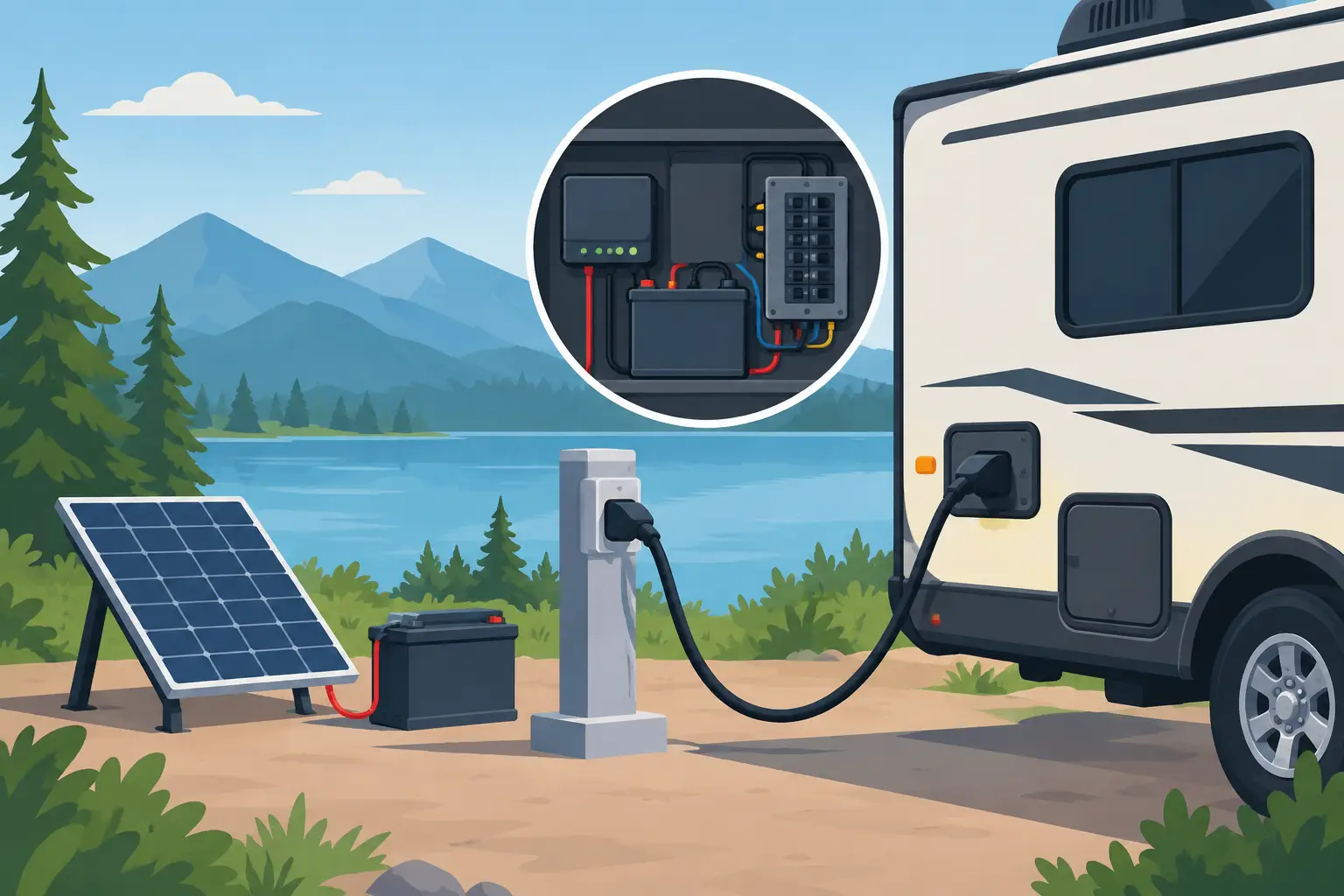
Most RVs have both a 12-volt DC system and a 120-volt AC system. They work alongside each other, but they serve different purposes. Confusing them is one of the most common reasons owners chase the wrong problem.
The 12-volt system gets its power from the house battery or battery bank. It commonly operates the interior lights, water pump, vent fans, furnace controls, refrigerator controls, slide-out controls, propane detector, and many control panels. Because these items may work without shore power, a camper can still feel partly functional even when it is unplugged.
The 120-volt system is the familiar household-style power used when your RV is plugged into campground shore power, connected to a generator, or supplied by an inverter. This system typically runs wall outlets, the microwave, air conditioner, electric space heaters, and other higher-demand appliances.
Some equipment uses both systems. Your refrigerator may use 120-volt power to cool when plugged in but still need 12-volt power for its control board. Your water heater may have propane and electric heating options while relying on 12-volt controls. That is why a single dead battery, tripped breaker, or poor connection can create symptoms that seem unrelated.
Camper Electrical System Guide: Know Your Power Sources
The battery is the heart of the 12-volt side. It stores power for use when you are not connected to shore power. A healthy battery should provide enough voltage to operate basic items, but usable capacity depends on its type, age, condition, and how much power your family uses.
Lead-acid batteries are common and less expensive, but they need regular attention and should not be deeply discharged. Lithium batteries cost more upfront but provide more usable capacity, charge faster, and generally last longer. Either type needs a properly matched charging setup. Installing lithium batteries in a camper designed around older lead-acid charging equipment may require converter or charging-system changes.
When your RV is plugged in, the converter changes 120-volt shore power into 12-volt power. It runs many 12-volt loads and recharges the battery. If lights are dim, the water pump is weak, or the battery never seems to recharge while plugged in, the converter, battery, fuses, wiring, or shore-power supply could be involved.
An inverter does the opposite. It changes battery power into 120-volt AC power for selected outlets or appliances. Inverters are useful for dry camping, but they can drain batteries quickly. A coffee maker, hair dryer, or portable heater may be normal household equipment, yet each can demand more battery power than many owners expect.
Shore Power: 30-Amp and 50-Amp Service
Your RV shore cord connects to a campground pedestal or a properly installed home outlet. A 30-amp RV service provides up to 30 amps of 120-volt power. A 50-amp RV service provides two 120-volt legs and substantially more available power. It is not simply “20 amps more.”
The practical difference matters on a hot Tennessee afternoon. A 30-amp camper may struggle to run an air conditioner, microwave, and electric water heater at the same time without tripping a breaker. A 50-amp RV has more room for multiple high-demand appliances, but it can still overload a bad pedestal, damaged cord, loose connection, or individual circuit.
Use a surge protector or electrical management system when connecting to unfamiliar shore power. These devices can help identify reverse polarity, low voltage, high voltage, or other pedestal problems before power reaches your RV. They are not a cure for every electrical issue, but they are a smart layer of protection for sensitive appliances and electronics.
Avoid relying on lightweight household extension cords for RV power. Undersized cords can overheat, cause voltage drop, and damage plugs or equipment. If you need an adapter, use a quality RV-rated adapter and understand its limitation. Adapting a 30-amp RV to a 15-amp home outlet may keep the battery charged and run a few small loads, but it will not safely support an air conditioner or other major appliance.
Start With the Simple Checks
When something stops working, begin with the obvious before assuming the worst. Verify that the shore-power pedestal breaker is on and that your RV cord is fully seated. Look for scorching, melted plastic, discoloration, or a hot plug. Do not continue using a connection that shows heat damage.
Inside the RV, check the main breaker panel for a tripped breaker. A breaker may sit between ON and OFF, so move it fully OFF before resetting it to ON. If outlets are dead, check any GFCI receptacles, often located in the bathroom, kitchen, exterior compartment, or near the sink. One tripped GFCI can disable several downstream outlets.
For 12-volt issues, check the battery disconnect switch, battery terminals, and fuse panel. Corroded or loose terminals can cause weak lights, intermittent slide operation, and control-panel errors. A battery may show some voltage while sitting unused but still fail under load. If the water pump slows dramatically or lights dim when a fan turns on, the battery and its connections deserve attention.
Do not replace a blown fuse with a larger fuse. Fuses are sized to protect the wiring. Installing a larger one can allow the wire to overheat before the fuse opens the circuit.
Warning Signs That Need Professional Diagnosis
A tripped breaker once after running too many appliances may be a simple overload. A breaker that trips repeatedly, however, is telling you something. The cause could be a failing appliance, damaged wiring, a loose connection, moisture intrusion, or a problem inside the breaker panel.
Burning smells, buzzing sounds, warm outlets, flickering lights, melted plugs, or blackened terminals require immediate attention. Shut off the affected power source if you can do so safely. Do not keep testing the circuit to see whether it will “hold this time.” Electrical heat can damage wiring hidden behind walls and cabinets long before the problem becomes visible.
You should also call for help if the battery will not charge, the converter hums loudly or gets unusually hot, the air conditioner trips the breaker, or power works only intermittently. RVs vibrate on the road and sit through changing weather. Connections can loosen, rodents can damage wiring, and water leaks can reach areas that should stay dry.
For owners around Maryville, Knoxville, Townsend, Tellico Village, and nearby communities, mobile service can be especially helpful when the RV is parked at home, in storage, or at a campground. Time In Season Mobile RV Repair comes to the camper, travel trailer, or fifth wheel, so you are not left trying to tow an electrical problem across town.
Prevent Problems Before the Next Trip
A quick electrical check belongs on your pre-trip routine, especially after winter storage or a long stretch without use. Inspect the shore cord and plug, test the GFCI outlets, look over battery terminals, and confirm that the battery is charging when connected to shore power. Run the slide-outs, water pump, fans, and major appliances before departure, when there is time to address a problem.
During storage, keep batteries maintained according to their battery type and charger requirements. Clean terminals, secure battery cables, and make sure battery compartments are dry and properly ventilated. If your RV has been exposed to a roof leak or rodent activity, an electrical inspection is worth scheduling before your next getaway.
A little attention to your camper’s electrical system keeps small issues from taking over a weekend that was supposed to be spent relaxing. When something does not look, smell, or sound right, trust that instinct and get it checked before the road calls again.